
Professor shows how psychology affects ministry in new book
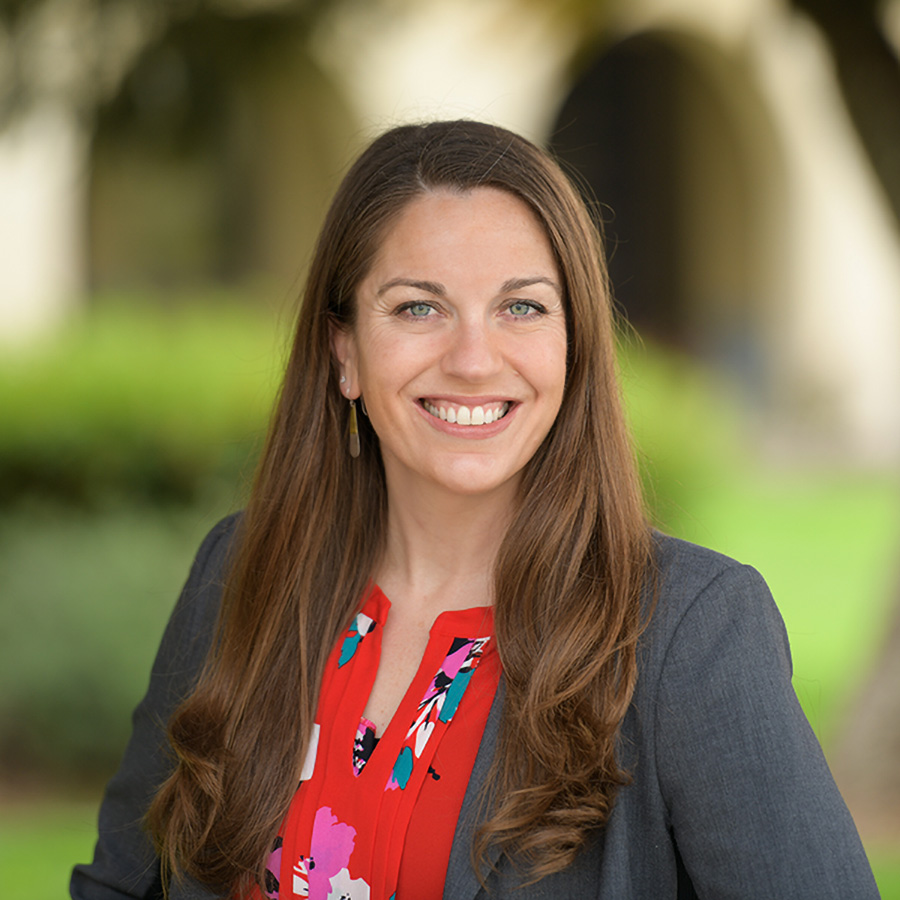 RIVERSIDE, Calif. (Oct. 2, 2026) — Since 2019, Dr. Erin Smith, director of research for the College of Behavioral and Social Sciences, has worked with seminaries in North America that wanted to incorporate science curriculum
into their training for future pastors.
“Consistently across very different seminaries — Catholic, evangelical, Pentecostal, the whole range — I was asked similar questions about how the brain works and how trauma changes people,” said Smith, Fletcher Jones Endowed Professor of Research .
Plenty of information about psychology can be found online or through AI chatbots, making it difficult to know what is true and helpful. Smith realized that if she could give a clear answer to these questions, she could help pastors bring that knowledge into their congregations.
Out of that came her new book, “Pastoring the Whole Person: Psychology for Ministry Practice.” Designed for pastors and laypeople, it gives an overview of psychological science, highlighting areas where it can be used to empower church ministry. The book begins with discussion about the value of psychological sciences for Christians, before unfolding into chapters covering various psychological topics, and how the reader might apply them practically.
“I wrote this first for the pastors and leaders who understand their role as a leader in the church. But I also wrote this for the thoughtful Christian who is interested in how people work and how understanding the way they work can benefit their own spiritual formation,” she said.
Smith provided a closer look at the book.
Why is it important to mix psychology and theology?
I believe that all knowledge is held together in and through God. So, we shouldn’t just mix psychology and theology, we should be trying to integrate and create bridges between many different domains of knowledge if we want something closer to the wholeness of knowledge — the world as God sees it.
With this view, it makes sense to reject the idea that we can understand the world by reimagining our disciplinary silos. In this book, I aim to bring psych science to bear on ministry practice as one expression of the unity of knowledge that already exists in God himself.
It’s important for pastors to have an awareness of what they don’t know so they can find allies and partners in the church who can help flesh out this wholeness of knowledge. Science sticks around because it works, sometimes even when we don’t really understand why. My heart is to see the local church thrive, to encourage pastors and church leaders and to provide tools and ideas for ministry practices that support a congregation’s spiritual formation.
How can members of a congregation practically apply these concepts if they don’t have a background in psychology?
I start and end each chapter with an illustration, and then the chapter tackles a specific topic. Each chapter is relatively brief, focused on a single topic sandwiched between an opening and closing illustration. There are little markers and light bulbs where it says, “This is something you should really think about.” Then, there are clipboards that say, “This is an actual practice that you can do. Something that you can apply.”
At the end of each chapter, there are two sections. One is the high-level take-home points from the chapter. The second is additional questions or application ideas. The reader can answer these questions themselves, or they can incorporate that into a small group discussion.
Do you incorporate any of this into your classroom?
Yes. I teach cognitive psychology here, and this semester, my students are reading just over two-thirds of this book. For the past couple of years, I’ve sort of cobbled together a chapter here, a peer-reviewed article there, to supplement the psychology textbook that my students were reading. Then I realized I can actually use this book to structure some of those exact same conversations.
This semester I’m really excited to be working with my students through this material, just to even show them, “This is how you can take psychological science and benefit your own understanding and also apply it in other contexts.”
What do you hope readers take away from this book?
My first hope would be that readers walk away with a sense of amazement at how big God is. There are so many layers to being human and to understanding human psychology that we could write books forever and never get to the end of it because we reflect God’s image.
I also hope pastors will ask new questions like, “How can my understanding of our differences and our similarities influence the way I make decisions about what ministries to prioritize, how to organize certain meetings, how to teach on Sunday mornings, etc.”
My hope is that as people understand a little more about basic human psychology, they’ll have that needle in the back of their mind that says, “Is this going to meet my audience where they are? Is this structured in a way that complements basic human psychology, or am I fighting against it?”
The College of Behavioral and Social Sciences will be hosting a book launch open house on Oct. 29 from 4 to 5:30 p.m. in Large Copenbarger. Smith’s book is available for purchase at that time, as well as on Amazon.