
Lecturer shares how to navigate conflict using biblical principles
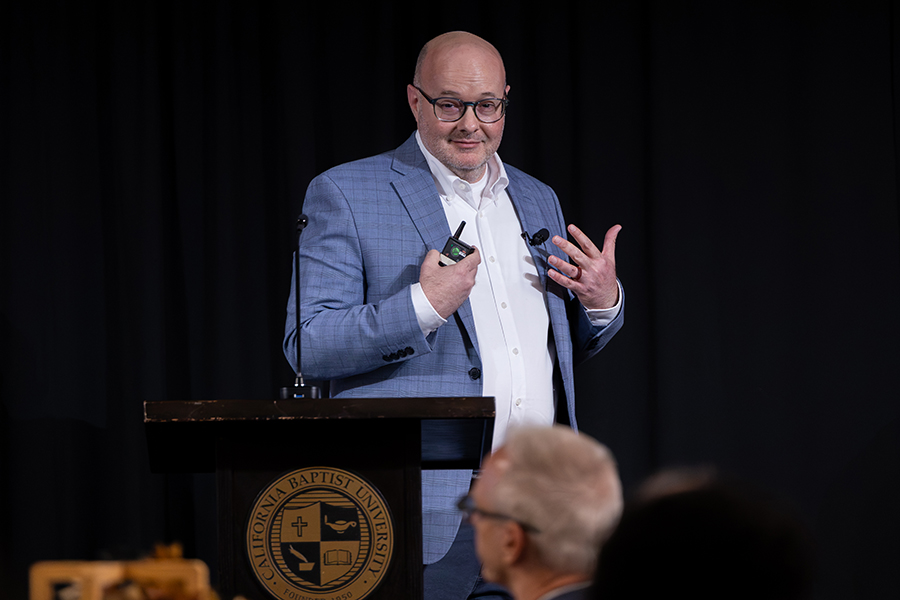
RIVERSIDE, Calif. (Nov. 4, 2026) — When defining conflict, Chris Thompson likes to use a definition by Ken Sande, founder of Peacemaker Ministries and Relational Wisdom 360.
“It’s a difference of opinion or purpose that frustrates someone’s goals or desires,” Thompson told the audience at the School of Christian Ministries Lecture Series at California Baptist University.
Conflict, and how to resolve it, was the main subject of Thompson’s lecture titled “Horses, Leadership and Paul’s Letter to the Philippians: Lessons I’m Learning about Conflict Resolution” on Oct. 27.
Thompson serves as the associate vice president for academic administration at Southeastern Baptist Theological Seminary, in North Carolina. He also teaches leadership courses at the seminary and is the program coordinator of the master’s in ministry leadership degree.
Using Paul the Apostle’s model for resolving conflict in the book of Philippians, along with several other biblical passages, Thompson wanted his listeners to be committed to being peacemakers.
“As I look at the future, and where we are right now especially with the church, we want to make sure that we’re working together for each other’s success and that we’re obeying the great commandment to love God with our whole heart, mind, soul and strength, loving our neighbor as ourselves,” Thompson said.
After graduating from the University of Tennessee with a sociology degree and no job lined up, Thompson decided to work on a ranch close to his house.
He didn’t know anything about horses at the time, he said. One of his mom’s friends owned horses and taught him the ropes, and in three months, he was a professional horse trainer.
During that time, he learned about conflict-resolution. A horse named Super had been abused in the past, and for years he wouldn’t let anyone touch his ear, Thompson said. He built a relationship with Super, to establish trust on low-stakes things in order to eventually gain enough trust for the high-stakes things — touching Super’s ear.
“Everyone had been avoiding it, but that was the key,” Thompson said. “Don’t avoid conflict, but move into it wisely.”
There are four common types of workplace conflict, he said. These are task conflict, relational conflict, process conflict and status conflict. Within each, there are clear contributors such as poor communication, unclear definitions of success and outdated processes.
Not every type of conflict is present in the book of Philippians, but Paul the Apostle navigates an issue between two women using wisdom and practical strategies. Thompson shared with listeners how Paul did this, and why it worked.
“He addresses relational conflict by creating a safe space for them,” Thompson said. “He lets them know that he’s praying for them. He calls them partners in the Gospel. He acknowledges the good work that God has started.”
Thompson highlighted where Paul points to Jesus as an example of humility, and where he credits the women for their faithfulness.
“The Lord is in the midst of these conflict situations, and we have been given the ministry of reconciliation,” Thompson said. “This isn’t an up for grabs type of thing. This isn’t just a nice thing to do. This is what we’ve been given. Everything is from God and has been reconciled to Him through Christ.”